
Insights from the PDA/FDA Joint Regulatory Conference 2024
7 min. reading time | by Sabine Paris, PhD, and Thomas Peither
Published in LOGFILE 20/2024
Reading SOPs is not Training! This powerful statement was echoed in several sessions with the PDA/FDA Joint Regulatory Conference 2024. It highlights a critical point: training is more than just reading procedures – it requires performance evaluation. Sabine Paris and Thomas Peither attended the event and have highlighted some of the other key takeaways in today’s feature.
The 33rd Annual PDA/FDA Joint Regulatory Conference was held in Washington from September 9-11, bringing together over 900 participants. It was a great opportunity for knowledge sharing, connecting theory with real-world practice, and plenty of networking.
We attended the event as representatives of GMP-Verlag and have highlighted some of the key takeaways in this article. The full report will soon be available on our online GMP knowledge portal, the GMP Compliance Adviser.
What's new from the FDA?
On the first day of the conference, attendees heard the term "sustainable quality" several times.
Patrizia Cavazzoni, FDA CDER, used the term in her keynote speech. What does the FDA mean by it? It does not mean that the pharmaceutical industry should now become sustainable in terms of CO2 reduction, but that quality structures should be established in a sustainable way. “Sustainable compliance is a long-term approach," said Cavazzoni. It is therefore more of a continuation of the quality culture approach. It promotes the idea that quality processes should be established in such a way that they have a sustainable, i.e. long-term, effect. This is in contrast to the short-term measures that are often implemented following inspections and the resulting CAPAs. Jonathan Chapman, FDA Office of Manufacturing Quality, emphasised in a later session that CAPAs do not have to be implemented within the 15-day response time after an inspection, but that a reliable plan to correct the deficiencies must be presented. Again, sustainable implementation is preferable to a quick fix.
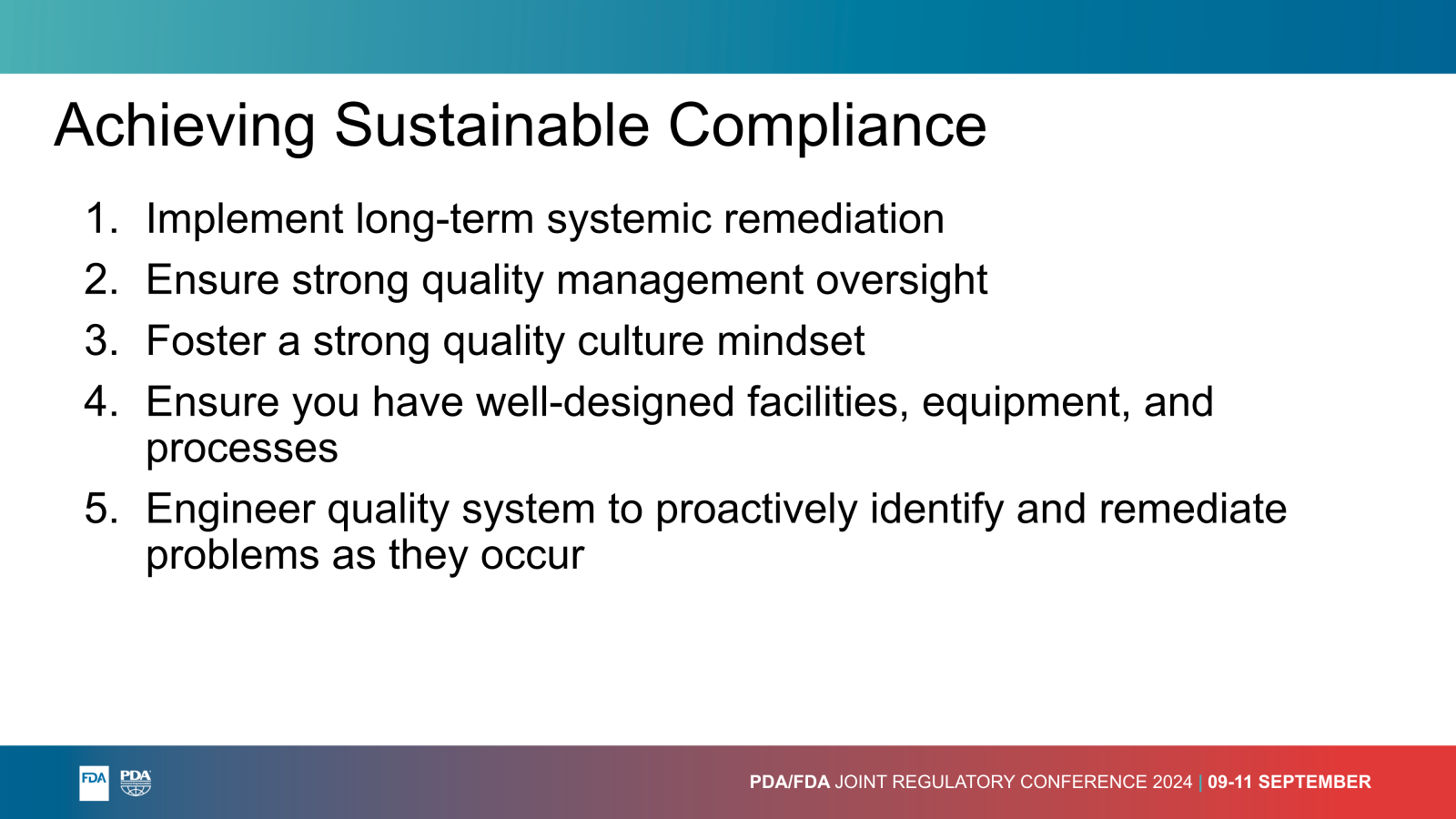
Figure 1 Achieving Sustainable Compliance (Source: Patrizia Cavazzoni, CDER)
And the most important ingredient is: top management! This is not really new, but it cannot be repeated and emphasised enough. And Cavazzoni said: "Top managment sets the tone" and implored the audience that quality is a holistic and continuous approach and that such an approach cannot work without the active involvement of senior management.
ORA Transitions to OII: A Major FDA Reorganisation
On 1 October, the FDA will undergo one of its most significant reorganisations in decades. The Office of Regulatory Affairs (ORA) will officially become the Office of Inspections and Investigations (OII), combining key resources from across the FDA into a single, more powerful unit.
This change is designed to improve efficiency and strengthen compliance across the agency. While companies may not experience immediate effects, the FDA expects the industry to see improved inspection quality in the long term.
Looking ahead to 2025, the FDA is planning further developments to refine the reorganisation. Patrizia Cavazzoni emphasized the vision of a "One Compliance Group" within the agency. Meanwhile, Alonza Cruse, ORA, described the new direction as a “holistic approach to compliance” with a focus on building a "strong inspectorate."
What's new in Pharmaceutical Quality?
This question was answered on the first day of the PDA/FDA Conference 2024 in Washington by Tina Kiang, Division of Regulations and Guidance, OPPQ, and Tara Gooen Bizjak, Director of Manufacturing Guidance and Policy Staff, CDER. They provided a concise overview of recently published pharmaceutical quality and CGMP guidance.
Tina reported on the recent reorganization of the Office of Pharmaceutical Quality (OPQ) to create a more agile, connected and influential organization. The previous structure has been broken down and recombined. New and lifecycle products are now handled by the same offices (Offices of Product Quality Assessment I-III). A new internal Office of Policy for Pharmaceutical Quality (OPPQ) was created.
She presented 12 new or revised guidelines for industry that have been published in recent months. These include: Advanced Manufacturing Technologies Designation Program, Container Closure System and Component Changes: Glass Vials and Stoppers.
Just published in early September: The Control of Nitrosamine Impurities in Human Medicines (see figure 2).
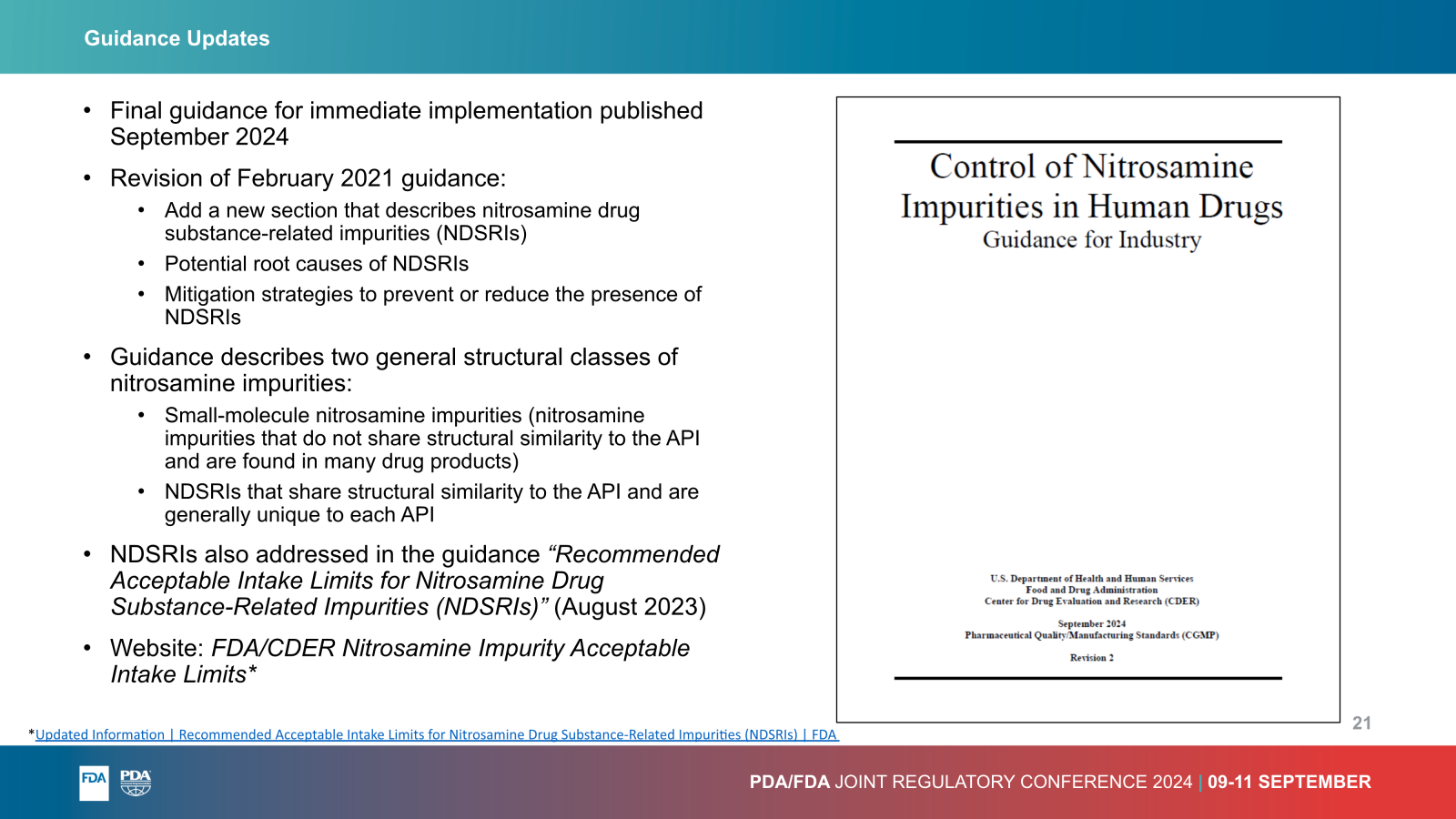
Figure 2 Contriol of Nitrosamine Impurities in Human Drugs (Source: Tina Kiang, FDA/OPQ/OPPQ)
The FDA’s Q&A on CGMP requirements has been supplemented in 2023 and 2024 by Q&As on parametric release for sterile drug products that are not terminally sterilized and adulterated ophthalmic drug products.
Recent Inspectional Findings
Timothy Pohlhaus, CDER, showed impresssive photos and examples from inspection findings at aseptic products. Issues were for instance aseptic filling, aseptic practices and behaviors, airflow visualization studies, media fills, poor aseptic practices, aseptic gowning and cleanroom design.
Madushini Dharmasena, Senior Pharmaceutical Quality Assessor, CDER, presented pre-license and pre-approval inspectional trends for biologics. The TOP 3 of outstanding deficiencies were found in the categories:
- environmental/personnell monitoring
- data integrity,
- aseptic process control and validation.
During the discussion with other FDA regulators also from CBER the following most concerning trends were named:
- inadequate investigations into issues, weak attempts to get to the root cause, a good investigation is costly!
- lack of trend analysis, e.g. in environmental monitoring, not realized that there is a pattern with 700 mold findings in 3 years!
- lack of SOPs
- non-sterile media fills
- lack of cleaning validation
Reading SOPs is not Training!
This powerful statement was echoed in several Q&A sessions with the FDA. It highlights a critical point: training is more than just reading procedures – it requires performance evaluation.
FDA representatives stressed that effective training is a cornerstone of GMP compliance. However, they cautioned against repetitive, ineffective training. A key takeaway? Recurrent failures often stem from shallow root cause analysis, signaling that quality management systems may not be fully embraced in practice.
As Douglas Throckmorton, Deputy Director for Regulatory Programs, CDER, put it, "We are in the age of quality." Every employee must take ownership of quality, from the bottom up. Patrizia Cavazzoni added: "Senior leaders are the most important ingredient. They set the tone!"
Of course, proper GMP training and performance monitoring remain areas of focus during FDA inspections.
Do you have any questions or suggestions? Please contact us at: redaktion@gmp-verlag.de

You may also be interested in the following articles:


