Skip to main content Skip to search Skip to main navigation

Biotechnological Medicinal Products: Global Trends and Perspectives

A report from the Swiss Biotech Day 2023 in Basel

5 min. reading time | by Sabine Paris
Published in LOGFILE 19/2023

The Swiss Biotech Day 2023 took place on 24 and 25 April in Basel. The conference is one of the industry's most important meeting places for developers and manufacturers of biopharmaceuticals and is growing in popularity every year.

1,800 participants from 44 countries learned about industry developments, current trends, laboratory automation and successful communication with regulatory authorities. A special feature of the event was the Global Village, where delegations from China, Canada, Taiwan, Spain, Queensland and Thailand set up booths and held round-table discussions on research collaboration, legislation and investment.


Biotechnological medicinal products as a driver of innovation

Alexandra Zemp, McKinsey, Isma Hachi, IQVIA, Daniel Chancellor, Citeline, and Maurice Perrinjaquet, EY, presented the global trends from the perspective of consultancies and companies supporting research and development of biopharmaceuticals.

The biotech pipeline grew by 7% in 2022, said Isma Hachi. In China, the pipeline has grown particularly strongly at 19%. China-based companies now account for 20% of the global pipeline.

67% of all newly approved drugs worldwide come from biotechnology companies. In recent years, there has been a remarkable shift towards self-marketing of developed products. In the meantime, 69% of the companies market their medicines themselves.
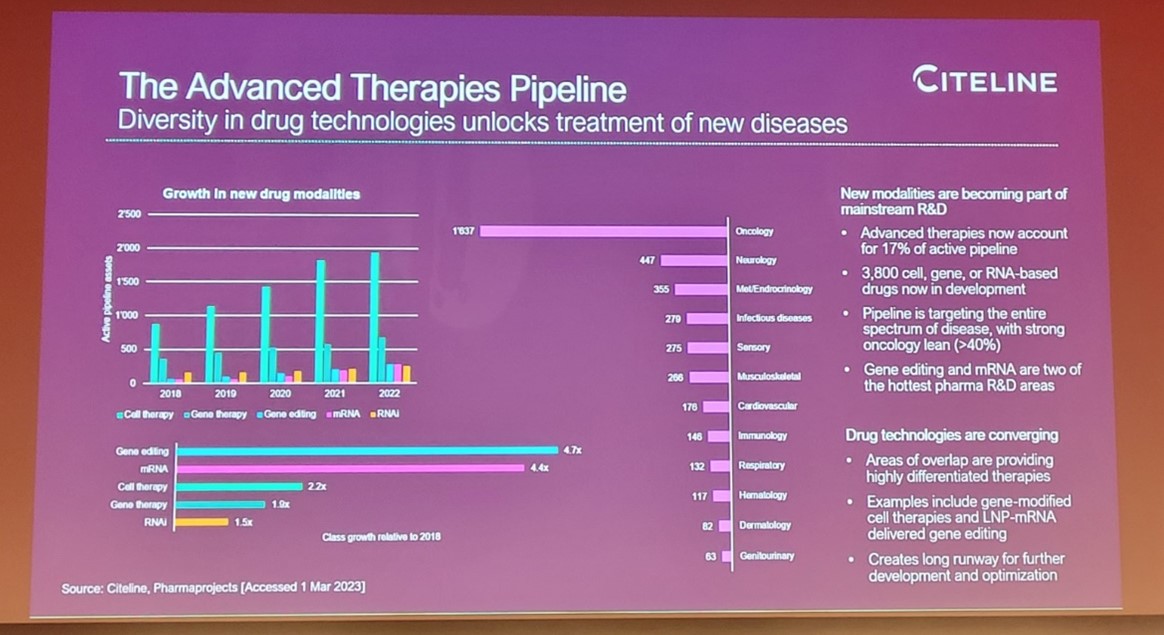
Figure 1                Development of the biotech pipeline and new approvals (Source: Isma Hachi, IQVIA)


Maurice Perrinjaquet pointed out that the industry faces the risk of growth gaps as patents expire. Companies may be forced to make high-value acquisitions to fill these gaps. The growth gap for the top 25 biotech companies by sales is expected to double from USD 52 billion in 2025 to at least USD 100 billion in 2027.

Alexandra Zemp described the biotech industry as a driver of innovation. Every day, one new company is founded worldwide and eleven new patients are enrolled in clinical trials.
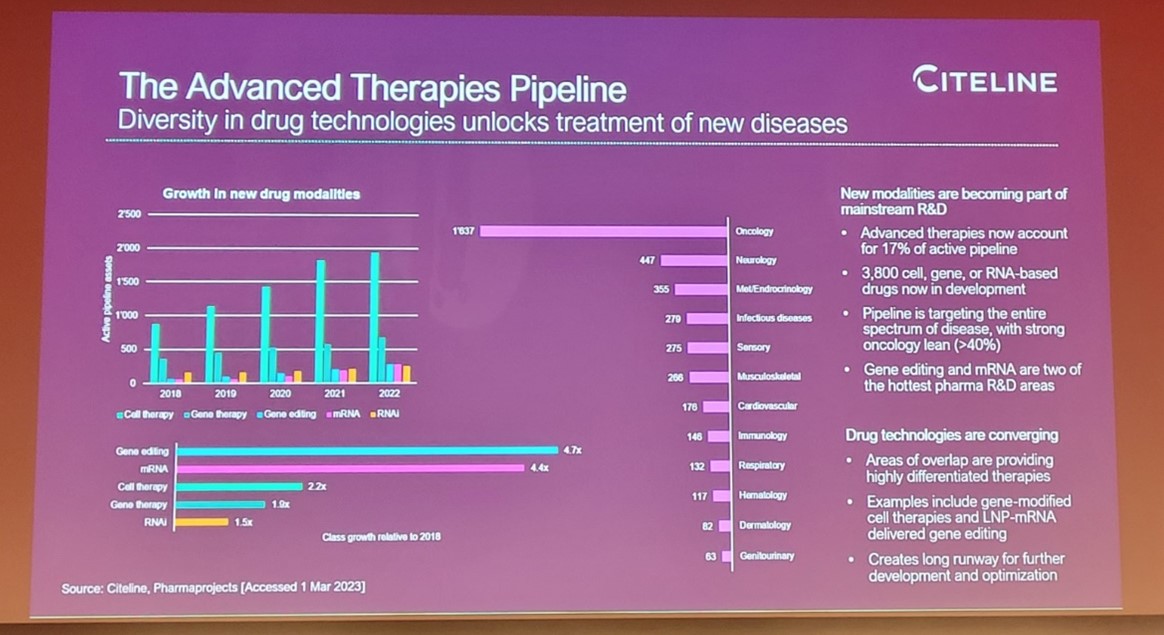
Figure 2                ATMP pipeline    (Source: Daniel Chancellor, Citeline)

Advanced therapy medicinal products (ATMPs) already account for 17% of the pipeline of new biotech products, Daniel Chancellor reported. 3800 cell-, gene- or RNA-based medicines are currently in development. More than 40% of these are anti-cancer drugs. Gene editing and mRNA are two of the most important areas of research and development.


Prospects and challenges for biotechnological medicines

All panelists in the panel discussion expect many interesting and groundbreaking innovations in the next 5 to 10 years. In particular, RNA-based products will play an important role. Fast-track approvals for drugs to treat serious or life-threatening diseases will be increasingly used.

Alexandra Zemp sees challenges not only in finding talented people and raising capital, but also in the regulatory requirements for clinical trials and fast-track approvals, health insurance reimbursement policies, and data infrastructure (start-up companies with innovative products mostly have little data on their products and their processes).

Isma Hachi highlighted the commercial aspect of product value. An important question here is: When is my product more advantageous than others?

Financing new products is becoming increasingly difficult. The willingness to pay for innovations is decreasing, said Maurice Perrinjaquet.

Artificial intelligence (AI) can help to overcome these challenges, emphasised Alexandra Zemp. In clinical development, for example, AI is expected to reduce costs by 40 to 80 percent.


Conclusion

Biotech drugs are booming, leading the world in new approvals. A new biotech company is founded every day. China in particular is experiencing strong growth. Most companies market the products they develop themselves. The innovation pipeline is well filled for the next 5 to 10 years.

The challenges are mainly in the areas of financing, human resources, patents, regulatory requirements and health policy frameworks. AI can be a way to keep biotech innovations affordable in the future.


Do you have any questions or suggestions? Please contact us at: redaktion@gmp-verlag.de

Dr. Sabine Paris
Dr. Sabine Paris

You may also be interested in the following articles:

How is a QRM process initiated?

How is a QRM process initiated?

You can view the answer here:
Read more
FDA: Updated Pre-RFD Guidance for Combination Products

FDA: Updated Pre-RFD Guidance for Combination Products

The U.S. FDA has released an updated final guidance on preparing a Pre-Request for Designation (Pre-RFD), replacing the previous 2018 version. The revised document provides new recommendations for interacting with the Office of Combination Products (OCP) and clarifies expectations for Pre-RFD submissions.
Read more
EDQM: 9 Virtual Training Modules on Ph. Eur. and CEPs

EDQM: 9 Virtual Training Modules on Ph. Eur. and CEPs

The EDQM has introduced a modular training programme covering chemically defined active substances and medicinal products. It will take place between 1 and 12 December 2025.
Read more
Previous
Next

Related Products

Skip product gallery
GMP Compliance Adviser | Named User Licence | 12M

GMP Compliance Adviser | Named User Licence | 12M

The GMP Compliance Adviser is an online publication that covers all aspects of Good Manufacturing Practice (GMP) in one source.In the GMP Compliance Adviser you’ll find: GMP in Practice This part contains 21 chapters with GMP expert knowledge to base your decisions upon. It provides practical assistance with checklists, templates and SOP examples. It is written by more than 80 authors with hands-on experience directly linked to the industry. The individual chapters describe the different aspects of GMP in clear language. Technical, organizational and procedural aspects are covered.More than 700 checklists, templates and examples of standard operation procedures taken directly out of practice help you in understanding the GMP requirements.GMP RegulationsThese chapters cover the most important GMP regulations from Europe and the United States (CFR and FDA), but also PIC/S, ICH, WHO and many more.  Sample Documents In addition, the GMP Compliance Adviser contains many sample documents and practical examples that you can use.

Ready for dispatch, Delivery time appr. 2-5 workdays (2-3 weeks for christmas goodies)
€1,335.00 net excl. VAT
GMP:KnowHow Pharma Logistics (GDP) | Named User License | 12M

GMP:KnowHow Pharma Logistics (GDP) | Named User License | 12M

Your knowledge base about GDP-compliant handling of your pharmaceutical logistics. It is important that you as a logistics service provider, but also as a client in the pharmaceutical industry, adhere precisely to the regulatory requirements. The GMP:KnowHow knowledge portal guides you through the regulatory jungle of the pharmaceutical and logistical supply chain! The knowledge portal gives you an easy-to-understand overview of all the important topics. Using graphics, you can easily navigate through all the areas covered by the EU GDP Guidelines (2013/C 343/01). You also have the relevant passages of the regulations directly at hand for each topic. This allows you to compare the requirements directly and saves you a lot of time on time-consuming searches and research!One thing is certain: the knowledge portal answers your questions about the supply chain of medicinal products, active pharmaceutical ingredients and medical devices. You don't have to be an expert. Yet.You will find answers to your questions in the GMP:KnowHow Pharma Logistics (GDP). Where does GDP begin, where does GMP end? What does GDP-compliant mean? When do I also have to take GMP requirements into account? What permits do I need for certain activities? What requirements do I have to fulfil? What is the current legal basis? How am I covered? What authorizations do I have for my work, e.g. from my employer? Who is responsible — the client or the contractor? And many more What is the difference to the GMP Compliance Adviser? The GMP:KnowHow Pharma Logistics (GDP) is your guideline for Good Distribution Practice. It is a product that is independent of the GMP Compliance Adviser and concentrates on content that is essential for carriers of medicinal products, active pharmaceutical ingredients and medical devices as well as for logistics clients. The focus is on practical knowledge and how to apply it in your daily business. If necessary, the relevant regulations can be called up immediately alongside the practical knowledge, and you can see the relevant paragraphs at a glance. In addition, sample documents are available to help you make immediate progress. AuthorSimone Ferrante – now Director Quality at Fisher Clinical Services – was previously Head of Quality Control and Responsible Person according to GDP (VP) for the entire Grieshaber Group. She is also a long-standing author and GDP expert at GMP-Verlag.

Ready for dispatch, Delivery time appr. 2-5 workdays (2-3 weeks for christmas goodies)
€610.00 net excl. VAT
E-Learning GMP:READY | GMP for Engineers Online Course

E-Learning GMP:READY | GMP for Engineers Online Course

Why are GMP rules important for technicians and engineers? Technicians and engineers play a key role in ensuring compliance with Good Manufacturing Practice (GMP) standards. They are involved in critical activities such as: planning and construction of ventilation systems, maintenance of water treatment plants, calibration of measuring sensors. Therefore, they are jointly responsible for the quality of medicines and must ensure that their work complies with GMP standards.Your advantages: Fast familiarization with GMP topics in approx. 2 hours, time- and location-independent online training, printable personal certificate, 12-month access for initial and follow-up training, automatic updates in case of legal changes, content compliant with Article 7(4) of Directive 2003/94/EC.

Ready for dispatch, Delivery time appr. 2-5 workdays (2-3 weeks for christmas goodies)
€240.00 net excl. VAT
GMP Fundamentals | A Step-by-Step Guide

GMP Fundamentals | A Step-by-Step Guide

This handbook is a practical and easy to read guideline, giving you a quick and comprehensive overview of the complex world of Good Manufacturing Practice (GMP) without the need of previously acquired knowledge. Some topics are: GMP: Purpose and basic pharmaceutical terms Laws, licenses and inspections Personnel: Responsibility and hygiene Standard Operating Procedures (SOP) and documentation Design of rooms and facilities Processing and packaging Quality control and market release Suppliers, storage and logistics (Good Distribution Practice = GDP) Alphabetical index and abbreviations Using practical examples and comparisons to every-day life will help to easy understand GMP regulations.GMP Fundamentals is a helpful guide which facilitates the entry into the GMP world and teaches the necessary basics.

Ready for dispatch, delivery immediately after receipt of payment
€44.90 net excl. VAT