
Save Time and Money when Qualifying a Blister Packaging Line
Excerpt from the GMP Compliance Adviser, Chapter 13.C, Qualification of a servo-controlled blister packaging line
4 min. reading time | by Rainer Röcker, Senior Sales Manager Pharma Germany S&E, A, CH, Italy, Pharma Liquid at Pester Pac Automation GmbH
Published in LOGFILE 19/2026
Qualifying a blister packaging line is not only technically demanding, but also time-consuming and costly. Here you will find important tips on how to organise your qualification process in a cost-effective yet gmp-compliant manner.
The qualification of a blister packaging line typically follows the well-known “V-Model” described in GAMP® 5 (see figure 1). The V-model consists of the design phase, in which the requirements are defined (left-hand branch), and the specification phase, in which the requirements are verified (right-hand branch). The ‘tip’ of the V-model corresponds to the construction, delivery and installation of the plant and the associated acceptance tests. And this is precisely where the potential lies for a cost-effective yet GMP-compliant qualification process. Let's take a closer look at that today!
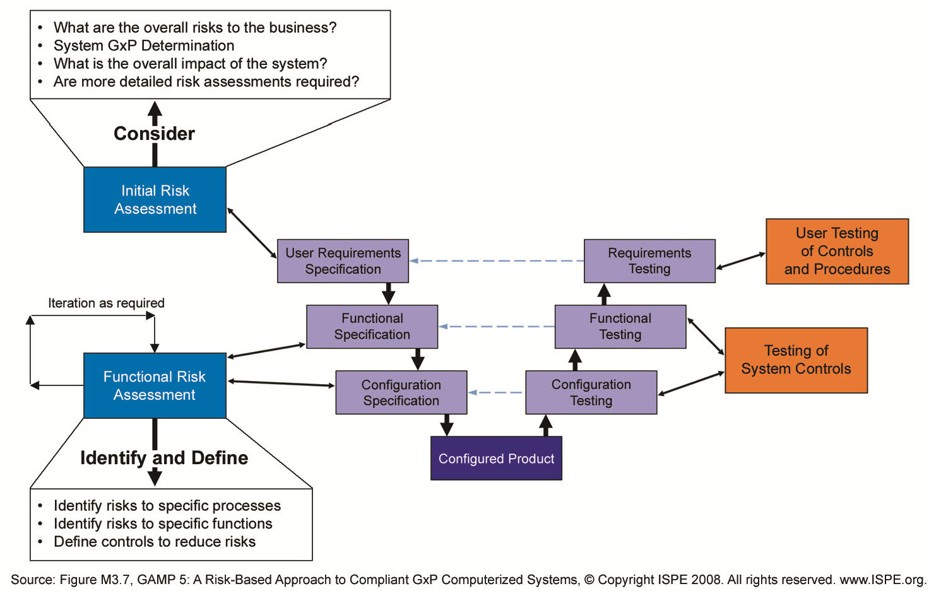
Abbildung 1 | Course of project based on the V-model
How to Integrate FAT and SAT Successfully?
Once the plant has been built in accordance with the specifications drawn up during the design phase, a comprehensive Factory Acceptance Test (FAT) is carried out, using test protocols previously approved by the equipment operator. The FAT is a quality inspection of the equipment that takes place at the manufacturer’s premises prior to delivery (factory acceptance). During this process, the equipment is checked for completeness, functionality and conformity with the order, to avoid delays caused by faults and rectifications at the customer’s site. The FAT is carried out by the manufacturer, often in the presence of the customer.
Following a successful FAT and installation of the system at the operator’s site, it is advisable to carry out a comprehensive Site Acceptance Test (SAT). The SAT is the technical acceptance test following delivery and installation. During the SAT, the correct installation, all performance characteristics, properties and functions are checked against the system specification and the approved technical design. The equipment is only commissioned once the SAT has been successfully completed.
FAT and SAT are elements of Good Engineering Practice and, in addition to technical tests, also serve to verify contractual agreements. They are not elements of GMP qualification. Nevertheless, many of the tests and checks carried out as part of FAT and SAT are activities that are also required as part of a qualification process, in particular Installation Qualification (IQ) and Operational Qualification (OQ). Whereas tests were often carried out multiple times in the past, synergies can now be exploited by coordinating tests and acceptance criteria in advance and defining the requirements for GMP-compliant documentation. This approach is referred to as Commissioning & Qualification.
It is often advisable to formally approve FAT and SAT documents and to use parts of them for qualification or to refer to them. However, a prerequisite for using FAT/SAT documents for qualifications is that they meet the requirements for GMP-compliant documentation. To this end, the FAT/SAT procedures are described in greater detail, particularly the process steps involved in the tests and how they lead to reproducible results.
The FAT protocols are reviewed and approved by the client’s quality assurance department prior to the FAT being carried out at the supplier’s premises. Any changes may also affect the qualification documents. Those FAT tests that are also relevant to the subsequent installation qualification (IQ) do not need to be repeated during the GMP qualification, provided that dismantling, transport and reassembly at the destination do not affect the conduct of the test or the result previously achieved. The same applies to the synergies between SAT and operational qualification (OQ). This approach saves time and money. Above all, the equipment can go into production sooner.
It is important to incorporate the relevant tests into the risk assessment. The ‘risk-based approach’, combined with active supplier involvement, thus leads to a more cost-effective qualification process.
Seven Tips for Efficient Qualification
It is possible to carry out a cost-effective qualification of blister packaging systems that complies with regulatory requirements by taking the following aspects into account:
1 | Perform supplier evaluation prior to awarding the project |
2 | Combine the requirements specification and functional specification into a single document |
3 | Include all variable data in the configuration specification |
4 | Keep the configuration specification in draft form for an extended period |
5 | Perform risk assessment focusing on GMP-relevant functions and make cross-reference to the IQ and OQ tests to be carried out |
6 | Commissioning & Qualification: capitalise on synergies by referring to tests already carried out by the manufacturer |
7 | Integrate the equipment manufacturer’s qualification documentation into your system |
Do you have any questions or suggestions? Please contact us at: redaktion@gmp-verlag.de

You may also be interested in the following articles:


