Skip to main content Skip to search Skip to main navigation

Challenges Lurking in Manufacturing

A GMP-DIALOGUE of our GMP conference, the GMP-BERATER-Days, in October 2019 revolved around the topic "Challenges lurking in manufacturing". Questions on the topic were asked by participants and answered by the experts in a lively discussion.

8 min. reading time | by Dr. Sabine Paris
Published in LOGFILE 20/2020


Experts:            GMP inspector Lea Joos, Christian Gausepohl, PhD, QP and Head of Quality Unit

Protocol:           Sabine Paris, PhD

Manufacturing is the origin of Good Manufacturing Practices - here is the core cell of GMP compliance. Many things must be observed and continuously implemented correctly. How do you deal with the challenges of everyday production? Who bears what responsibility? What can be delegated? How do you deal with deviations?


Serialization: How do I deal with when the number of uploaded numbers differs from the number of packages produced?

If only 99 serialization numbers were used in the balancing of a batch of 100 finished packs, this is a critical deviation. A folding carton does not bear a number! In the end, however, this usually does not pose any danger to the patient. The package in question would not be sold in the pharmacy because it cannot be found in the system.
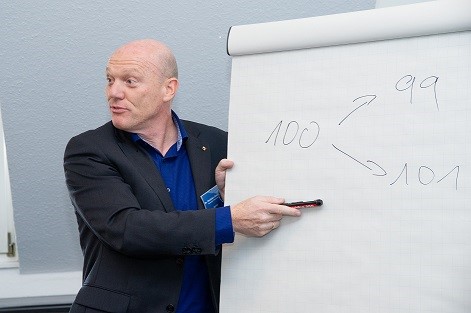


If the balance sheet shows that 101 numbers were uploaded but only 100 packages were produced, the deviation is not critical. A so-called "orphan" number was generated to which no package is assigned.

However, the aim should be to ensure that there are no deviations in number assignment at all. The manufacturer must determine how many deviations (in %) he considers permissible. All deviations can also be assessed as such in a formal procedure.  If the number is within the specified range, they do not necessarily have to be formally assessed. However, the generation of a large number of such numbers should be viewed critically in terms of security against counterfeiting.

A root cause analysis is obligatory in case of constantly recurring deviations (e.g. always one number too many). This analysis may not always lead to success, as the questioner reported from her practical experience. In addition, "the serialization software is currently updated almost weekly". This can be critical to quality.


Are there companies that train their employees on dummies?

There are companies that carry out simulated production steps for employee training in a separate environment - e.g. on intervention simulators. The PDA offers special training rooms in the USA. On the one hand, this is considered useful because production does not come to a standstill during this time and possible errors have no effect on products. On the other hand, participants emphasized that training directly in the running production by experienced employees is ultimately the best solution.

For new plants or products, for example, aseptic filling with water is simulated in the actual production environment. One participant reported on film recordings during media fill. As agreed, these will only be viewed if there are any deviations.


What measures should be taken in the event of "employee mistakes"? Are there alternatives to (in these cases mostly used) training?

The measure of all things is an appropriate root cause analysis of errors. The causes can be complex. In addition to actual human errors, device errors and faulty or incomplete specification documents are also possible. The causes of a "human error" (e.g. faulty specification documents, unsuitable processes) should not be overlooked by a hasty assumption of a "human error", but the actual, underlying cause should be determined.

Equipment must be adequately qualified and the related processes validated. SOPs must take into account possible pitfalls. For example, a line that is only fully visible for line clearance above a certain height should be listed in the corresponding SOP for line clearance, together with any necessary measures for smaller employees.

The US FDA sometimes asks in its inspections about the quota for "human error" and the measures taken to reduce this quota.

Employee training should be checked for its effectiveness, especially if the same errors occur again and again. The training courses should be as practical as possible. In the company, an experienced employee can easily assist the person to be trained. The head of production should be in constant contact with the production staff in order to know the actual practice better.


The production staff, especially the head of production, are in a field of tension between the fulfilment of production planning and the observance of quality targets. How can quality awareness be (better) anchored?

The communication of quality objectives can only be achieved through dialogue. In addition, they must be on a par with the production target and not be secondary.

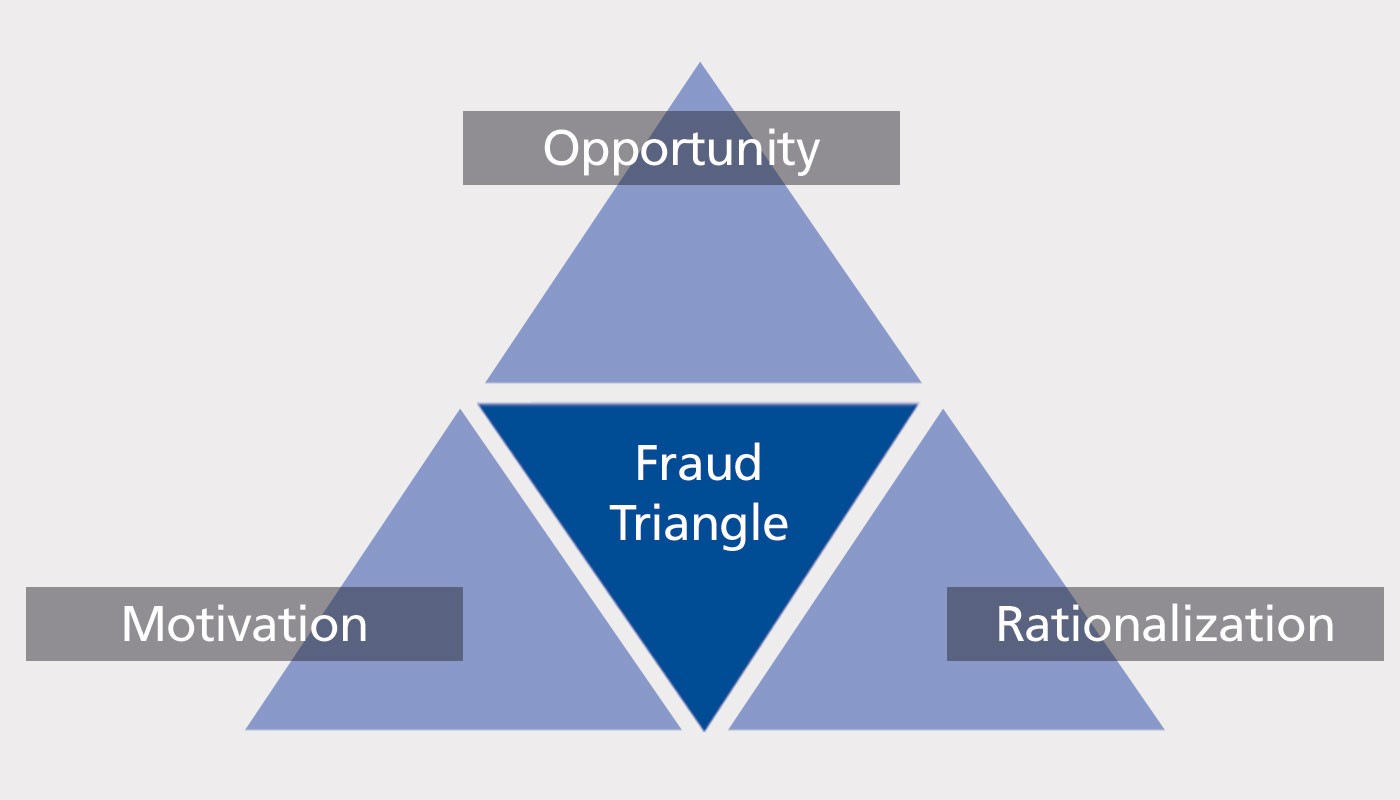
According to criminology, the three decisive factors for non-compliant behaviour of employees could be the following: motivation, opportunity and rationalization. This can be well illustrated in the so-called "Fraud Triangle", which is used in criminology.


Example for hand disinfection:

  • Motivation: "I don't have time to disinfect my hands."
  • Opportunity: "Nobody's looking."
  • Rationalization: "We are in production backlog. I have to save time. And nothing has ever happened before."


If the employees have a more pronounced quality awareness, this changes the "rationalization". In the best case, the employee omits the rule deviation or in the worst case feels bad about it.

It must be made clear to employees that each individual is responsible for quality. One way to communicate this is through contact with patients or feedback from patients. They report how the medicines produced have helped them. This creates emotional closeness, which is important for quality awareness.

The "opportunity" can also be reduced by increasing the probability of detection. For example, additional measurements or regular observations can be carried out at critical points.

It is important that the quality awareness is exemplified by the management and that realistic (production) goals are set in order to start with the possible motivation ("I don't have time..."). Useful are "Gemba Walks". The management goes to the production site, looks at the processes and talks to the employees. The goals are to gain practical experience, exchange with employees and gain knowledge, as well as to positively perceive the interest in the job and emotionally anchor the importance of the compliance aspect.


Couldn't the supervisory authorities exert more pressure on the management?

The GMP inspectors address the GMP requirements primarily to the functionaries named there (marketing authorisation holder, qualified person, head of production, head of quality control). The management (as a secondary level) has only a few concrete (e.g. management review) and usually higher-level tasks in the regulations, e.g. provision of resources.

Only in the case of overarching aspects/deficiencies will the management be addressed, if necessary, e.g. in the case of an increased number of deficiencies in an area that can be attributed to a lack of resources in this area. However, the authority should not be instrumentalized in this process.


Bottom line:

  • Target for serialization: if possible, no deviations in number assignment. The manufacturer should define how many deviations (in %) he considers permissible.
  • Trainings should be carried out as close to practice as possible, preferably by experienced employees. Simulations are suitable as an additional measure. The effectiveness of the training must be checked.
  • All employees should have a pronounced quality awareness in order to break through the "fraud triangle". Quality awareness must be exemplified by the management.
  • The GMP inspectors address the GMP requirements primarily to the functionaries mentioned there and not to the management.


Do you have any questions or suggestions? Please contact us at: redaktion@gmp-verlag.de

Dr. Sabine Paris
Dr. Sabine Paris

You may also be interested in the following articles:

How is a QRM process initiated?

How is a QRM process initiated?

You can view the answer here:
Read more
FDA: Updated Pre-RFD Guidance for Combination Products

FDA: Updated Pre-RFD Guidance for Combination Products

The U.S. FDA has released an updated final guidance on preparing a Pre-Request for Designation (Pre-RFD), replacing the previous 2018 version. The revised document provides new recommendations for interacting with the Office of Combination Products (OCP) and clarifies expectations for Pre-RFD submissions.
Read more
EDQM: 9 Virtual Training Modules on Ph. Eur. and CEPs

EDQM: 9 Virtual Training Modules on Ph. Eur. and CEPs

The EDQM has introduced a modular training programme covering chemically defined active substances and medicinal products. It will take place between 1 and 12 December 2025.
Read more
Previous
Next

Related Products

Skip product gallery
GMP Compliance Adviser | Named User Licence | 12M

GMP Compliance Adviser | Named User Licence | 12M

The GMP Compliance Adviser is an online publication that covers all aspects of Good Manufacturing Practice (GMP) in one source.In the GMP Compliance Adviser you’ll find: GMP in Practice This part contains 21 chapters with GMP expert knowledge to base your decisions upon. It provides practical assistance with checklists, templates and SOP examples. It is written by more than 80 authors with hands-on experience directly linked to the industry. The individual chapters describe the different aspects of GMP in clear language. Technical, organizational and procedural aspects are covered.More than 700 checklists, templates and examples of standard operation procedures taken directly out of practice help you in understanding the GMP requirements.GMP RegulationsThese chapters cover the most important GMP regulations from Europe and the United States (CFR and FDA), but also PIC/S, ICH, WHO and many more.  Sample Documents In addition, the GMP Compliance Adviser contains many sample documents and practical examples that you can use.

Ready for dispatch, Delivery time appr. 2-5 workdays (2-3 weeks for christmas goodies)
€1,335.00 net excl. VAT
GMP:KnowHow Pharma Logistics (GDP) | Named User License | 12M

GMP:KnowHow Pharma Logistics (GDP) | Named User License | 12M

Your knowledge base about GDP-compliant handling of your pharmaceutical logistics. It is important that you as a logistics service provider, but also as a client in the pharmaceutical industry, adhere precisely to the regulatory requirements. The GMP:KnowHow knowledge portal guides you through the regulatory jungle of the pharmaceutical and logistical supply chain! The knowledge portal gives you an easy-to-understand overview of all the important topics. Using graphics, you can easily navigate through all the areas covered by the EU GDP Guidelines (2013/C 343/01). You also have the relevant passages of the regulations directly at hand for each topic. This allows you to compare the requirements directly and saves you a lot of time on time-consuming searches and research!One thing is certain: the knowledge portal answers your questions about the supply chain of medicinal products, active pharmaceutical ingredients and medical devices. You don't have to be an expert. Yet.You will find answers to your questions in the GMP:KnowHow Pharma Logistics (GDP). Where does GDP begin, where does GMP end? What does GDP-compliant mean? When do I also have to take GMP requirements into account? What permits do I need for certain activities? What requirements do I have to fulfil? What is the current legal basis? How am I covered? What authorizations do I have for my work, e.g. from my employer? Who is responsible — the client or the contractor? And many more What is the difference to the GMP Compliance Adviser? The GMP:KnowHow Pharma Logistics (GDP) is your guideline for Good Distribution Practice. It is a product that is independent of the GMP Compliance Adviser and concentrates on content that is essential for carriers of medicinal products, active pharmaceutical ingredients and medical devices as well as for logistics clients. The focus is on practical knowledge and how to apply it in your daily business. If necessary, the relevant regulations can be called up immediately alongside the practical knowledge, and you can see the relevant paragraphs at a glance. In addition, sample documents are available to help you make immediate progress. AuthorSimone Ferrante – now Director Quality at Fisher Clinical Services – was previously Head of Quality Control and Responsible Person according to GDP (VP) for the entire Grieshaber Group. She is also a long-standing author and GDP expert at GMP-Verlag.

Ready for dispatch, Delivery time appr. 2-5 workdays (2-3 weeks for christmas goodies)
€610.00 net excl. VAT
E-Learning GMP:READY | GMP for Engineers Online Course

E-Learning GMP:READY | GMP for Engineers Online Course

Why are GMP rules important for technicians and engineers? Technicians and engineers play a key role in ensuring compliance with Good Manufacturing Practice (GMP) standards. They are involved in critical activities such as: planning and construction of ventilation systems, maintenance of water treatment plants, calibration of measuring sensors. Therefore, they are jointly responsible for the quality of medicines and must ensure that their work complies with GMP standards.Your advantages: Fast familiarization with GMP topics in approx. 2 hours, time- and location-independent online training, printable personal certificate, 12-month access for initial and follow-up training, automatic updates in case of legal changes, content compliant with Article 7(4) of Directive 2003/94/EC.

Ready for dispatch, Delivery time appr. 2-5 workdays (2-3 weeks for christmas goodies)
€240.00 net excl. VAT
GMP Fundamentals | A Step-by-Step Guide

GMP Fundamentals | A Step-by-Step Guide

This handbook is a practical and easy to read guideline, giving you a quick and comprehensive overview of the complex world of Good Manufacturing Practice (GMP) without the need of previously acquired knowledge. Some topics are: GMP: Purpose and basic pharmaceutical terms Laws, licenses and inspections Personnel: Responsibility and hygiene Standard Operating Procedures (SOP) and documentation Design of rooms and facilities Processing and packaging Quality control and market release Suppliers, storage and logistics (Good Distribution Practice = GDP) Alphabetical index and abbreviations Using practical examples and comparisons to every-day life will help to easy understand GMP regulations.GMP Fundamentals is a helpful guide which facilitates the entry into the GMP world and teaches the necessary basics.

Ready for dispatch, delivery immediately after receipt of payment
€44.90 net excl. VAT