Skip to main content Skip to search Skip to main navigation

3 Systems for Cleanroom Walls

Excerpt form the GMP Compliance Adviser, Chapter 3.E Cleanroom construction components

8 min. reading time | by Harald Flechl
Published in LOGFILE 08/2021

Over the past several years, wall and ceiling systems have become the established state of the art in finishing technology. The numerous manufacturers of such systems also offer solutions that are suitable for fire zones and large, high rooms – such as warehouse storage rooms.

Wall and ceiling systems are flexible when it comes to planning and installation; subsequent modifications can be made quickly and easily. The most common application is a "room-within-a-room" solution. This means that a conventional building made of concrete or brick with columns and support structures serves as a shell, and the clean rooms are fitted with system walls and ceilings inside it. To be able to benefit from the advantages of a walkable ceiling with fixtures, appropriate heights must be planned for the structure. A further advantage is the short assembly time at the construction site and the possibility of plan changes until shortly before assembly. As they are state of the art, there is little need for discussion with the authorities.

Wall systems made from metal panels are typically constructed according to one of three design principles:

  • mono-block
  • band grid
  • axis grid

The last-mentioned type is the most commonly used. Typically, the choice is made based on the desired design finish to achieve a sealed cleanroom surface.

Glass walls made of single-pane safety glass (SPSG) were still a ground-breaking achievement in the nineties, but today such fully transparent systems are offered by several manufacturers. During operation, it is often the case that special collision protection is not always necessary, as the employees are more "cautious" with glass. Due to their full transparency, SPSG wall systems often allow simpler visual communication and natural lighting into rooms with lower ceilings.

When cleaning, make sure that no streaks remain. Although streaks are not a sign of poor cleaning, people tend to equate optical clarity with the effectiveness of cleaning.

In Figure 3.E-14 you will find an overview of the most important information for each of the three systems.
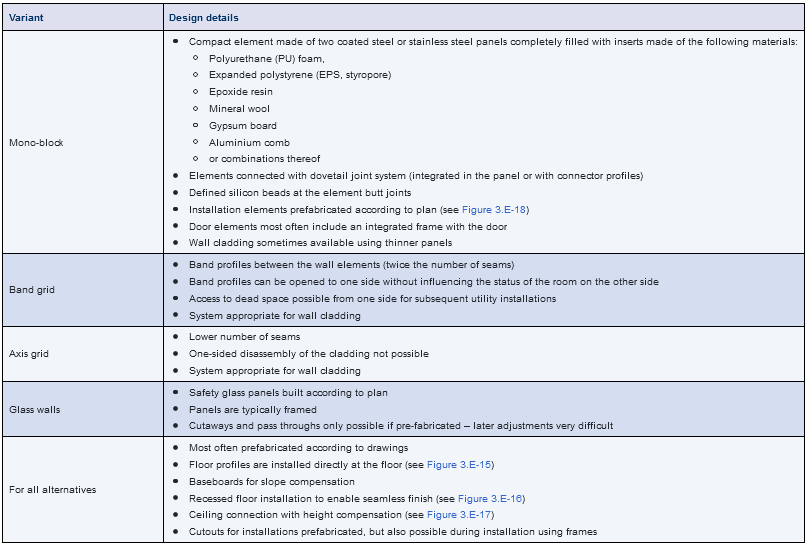
Figure 3.E-14 Comparison of wall system variants
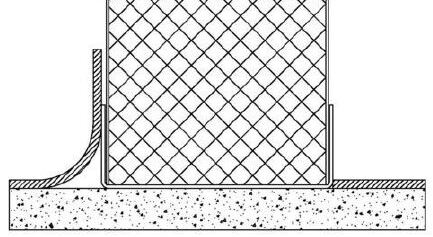
 

Figure 3.E-15 Wall element with simple floor rail installation
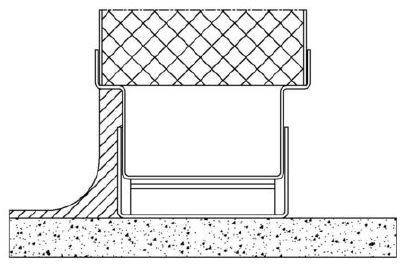
 

Figure 3.E-16 Wall element with recessed baseboard
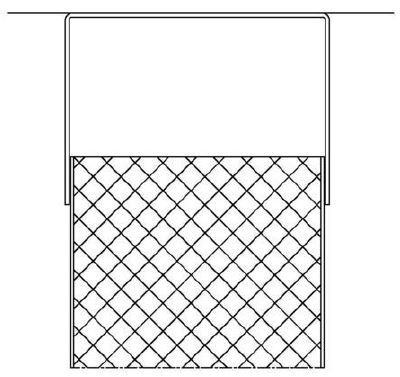
Figure 3.E-17 Wall element with ceiling installation profile
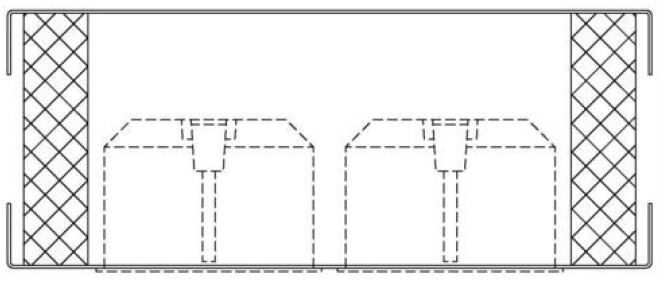
Figure 3.E-18 Cross section of installation components including pre-installed electrical outlets


Do you have any questions or suggestions? Please contact us at: redaktion@gmp-verlag.de

Harald Flechl
Harald Flechl

You may also be interested in the following articles:

ANVISA: Expands Recognition of Foreign GMP Authorities

ANVISA: Expands Recognition of Foreign GMP Authorities

Brazilian health authority ANVISA has updated the requirements for the recognition of Equivalent Foreign Regulatory Authorities (AREE) and the administrative procedures for Good Manufacturing Practice (GMP) certification (CBPF) through Normative Instruction IN 451/2026. The aim is to streamline and accelerate regulatory processes.
Read more
EDQM: Guidance on Reporting on Disappearances of Medicinal Products

EDQM: Guidance on Reporting on Disappearances of Medicinal Products

The EDQM has published guidance supporting the implementation of Recommendation CM/Rec(2024)3 on reporting medicinal products that disappear from the legal supply chain due to theft, loss or diversion. The initiative follows a European survey that identified shortcomings in reporting and co-ordination of such incidents.

Read more
Damage Control: Complaints and Recalls

Damage Control: Complaints and Recalls

Complaint handling and product recalls are important components of the Pharmaceutical Quality System (PQS). They serve to identify defective medicinal products and ensure that appropriate measures are taken to protect patient safety, as required by law and the competent supervisory authority.

Read more
What are the Phases of a Working Cycle During a Steam Sterilisation Process?

What are the Phases of a Working Cycle During a Steam Sterilisation Process?

Here's the answer:
Read more
EMA: 9 New Nitrosamines for Appendix 1

EMA: 9 New Nitrosamines for Appendix 1

Appendix 1 of EMA’s Questions and Answers on nitrosamine impurities has been updated. This appendix contains acceptable intakes (AIs) established for N-nitrosamines.
Read more
EMA: Reduced Testing of Incoming Starting Materials is a GMP Matter

EMA: Reduced Testing of Incoming Starting Materials is a GMP Matter

The European Medicines Agency (EMA) published an update to its “Quality of Medicines: Questions and Answers – Part 2”. The revision concerns the section on “Reduced testing of incoming starting materials”.
Read more
Previous
Next

Related Products

Skip product gallery
GMP Compliance Adviser | Named User Licence | 12M

GMP Compliance Adviser | Named User Licence | 12M

The GMP Compliance Adviser is an online publication that covers all aspects of Good Manufacturing Practice (GMP) in one source.In the GMP Compliance Adviser you’ll find: GMP in Practice This part contains 21 chapters with GMP expert knowledge to base your decisions upon. It provides practical assistance with checklists, templates and SOP examples. It is written by more than 80 authors with hands-on experience directly linked to the industry. The individual chapters describe the different aspects of GMP in clear language. Technical, organizational and procedural aspects are covered.More than 700 checklists, templates and examples of standard operation procedures taken directly out of practice help you in understanding the GMP requirements.GMP RegulationsThese chapters cover the most important GMP regulations from Europe and the United States (CFR and FDA), but also PIC/S, ICH, WHO and many more.  Sample Documents In addition, the GMP Compliance Adviser contains many sample documents and practical examples that you can use.

delivery time appr. 2-5 workdays
€1,368.00 net excl. VAT
GMP:KnowHow Pharma Logistics (GDP) | Named User Licence | 12M

GMP:KnowHow Pharma Logistics (GDP) | Named User Licence | 12M

Your knowledge base about GDP-compliant handling of your pharmaceutical logistics. It is important that you as a logistics service provider, but also as a client in the pharmaceutical industry, adhere precisely to the regulatory requirements. The GMP:KnowHow knowledge portal guides you through the regulatory jungle of the pharmaceutical and logistical supply chain! The knowledge portal gives you an easy-to-understand overview of all the important topics. Using graphics, you can easily navigate through all the areas covered by the EU GDP Guidelines (2013/C 343/01). You also have the relevant passages of the regulations directly at hand for each topic. This allows you to compare the requirements directly and saves you a lot of time on time-consuming searches and research!One thing is certain: the knowledge portal answers your questions about the supply chain of medicinal products, active pharmaceutical ingredients and medical devices. You don't have to be an expert. Yet.You will find answers to your questions in the GMP:KnowHow Pharma Logistics (GDP). Where does GDP begin, where does GMP end? What does GDP-compliant mean? When do I also have to take GMP requirements into account? What permits do I need for certain activities? What requirements do I have to fulfil? What is the current legal basis? How am I covered? What authorizations do I have for my work, e.g. from my employer? Who is responsible — the client or the contractor? And many more What is the difference to the GMP Compliance Adviser? The GMP:KnowHow Pharma Logistics (GDP) is your guideline for Good Distribution Practice. It is a product that is independent of the GMP Compliance Adviser and concentrates on content that is essential for carriers of medicinal products, active pharmaceutical ingredients and medical devices as well as for logistics clients. The focus is on practical knowledge and how to apply it in your daily business. If necessary, the relevant regulations can be called up immediately alongside the practical knowledge, and you can see the relevant paragraphs at a glance. In addition, sample documents are available to help you make immediate progress. AuthorSimone Ferrante – now Director Quality at Fisher Clinical Services – was previously Head of Quality Control and Responsible Person according to GDP (VP) for the entire Grieshaber Group. She is also a long-standing author and GDP expert at GMP-Verlag.

delivery time appr. 2-5 workdays
€610.00 net excl. VAT
E-Learning GMP:READY | Specialist Knowledge GMP for Engineers

E-Learning GMP:READY | Specialist Knowledge GMP for Engineers

Why are GMP rules important for technicians and engineers? Technicians and engineers play a key role in ensuring compliance with Good Manufacturing Practice (GMP) standards. They are involved in critical activities such as: planning and construction of ventilation systems, maintenance of water treatment plants, calibration of measuring sensors. Therefore, they are jointly responsible for the quality of medicines and must ensure that their work complies with GMP standards.Your advantages: Fast familiarization with GMP topics in approx. 2 hours, time- and location-independent online training, printable personal certificate, 12-month access for initial and follow-up training, automatic updates in case of legal changes,content compliant with Article 7(4) of Directive 2003/94/EC.The Author This e-learning course was developed with the collaboration of Dipl.-Ing. Andreas Nuhn (D & B Pharmadesign GmbH).

delivery time appr. 2-5 workdays
€245.00 net excl. VAT
GMP Fundamentals | A Step-by-Step Guide

GMP Fundamentals | A Step-by-Step Guide

This handbook is a practical and easy to read guideline, giving you a quick and comprehensive overview of the complex world of Good Manufacturing Practice (GMP) without the need of previously acquired knowledge. Some topics are: GMP: Purpose and basic pharmaceutical terms Laws, licenses and inspections Personnel: Responsibility and hygiene Standard Operating Procedures (SOP) and documentation Design of rooms and facilities Processing and packaging Quality control and market release Suppliers, storage and logistics (Good Distribution Practice = GDP) Alphabetical index and abbreviations Using practical examples and comparisons to every-day life will help to easy understand GMP regulations.GMP Fundamentals is a helpful guide which facilitates the entry into the GMP world and teaches the necessary basics.

delivery immediately after receipt of payment
€44.90 net excl. VAT